Engineering Excellence: A Technical Guide to Integrating Linear Lighting in Modern Architecture

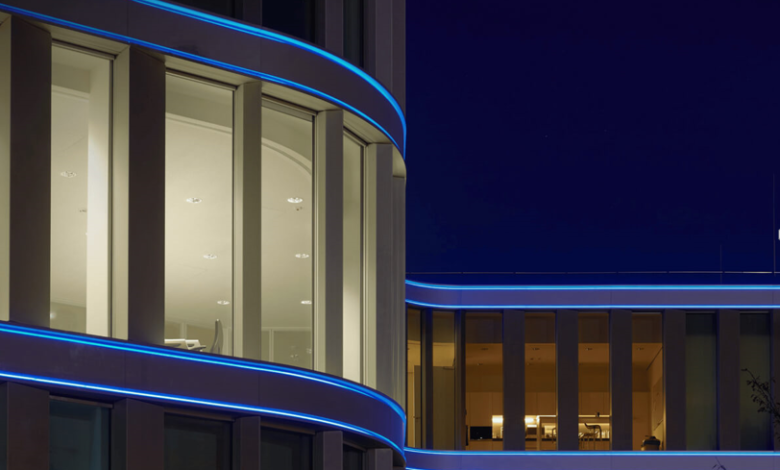
In the contemporary architectural landscape, lighting is no longer treated as a secondary decorative layer added after the structural phase. Instead, it has become a fundamental building block of spatial design. The rise of “invisible lighting”—where the illumination is felt but the source remains hidden—has placed a spotlight on the technical capabilities of linear LED systems. For architects and contractors, the challenge lies in selecting systems that don’t just look spectacular on opening night but maintain their integrity under the relentless stress of outdoor environments.
Specifying outdoor LED light strips waterproof solutions requires a deep understanding of more than just lumens and color temperature. It demands an appreciation for material science, thermal management, and electrical engineering. As projects grow in complexity—from luxury seaside resorts to high-traffic urban plazas—the margin for error regarding moisture ingress and mechanical failure disappears. This guide serves as a technical deep-dive for professionals tasked with delivering high-performance outdoor lighting.
Material Science: Beyond the Surface
When we discuss “waterproofing,” we are essentially discussing the barrier between delicate semiconductor components and the destructive power of the environment. The choice of encapsulation material is the single most important factor in the longevity of the installation.
Polyvinyl Chloride (PVC) vs. Silicone
Historically, PVC was the standard for waterproof LED tubing due to its low cost and initial clarity. However, from an engineering perspective, PVC has significant drawbacks in exterior applications:
- Thermal Instability: PVC becomes brittle in sub-zero temperatures and can soften significantly in extreme heat, leading to mechanical stress on the internal solder joints.
- UV Degradation: Under prolonged exposure to sunlight, PVC undergoes a chemical reaction that leads to “yellowing,” which shifts the color temperature (CCT) of the light and reduces lumen output.
Modern professional-grade exterior grade waterproof LED strips have largely transitioned to Silicone Extrusion. Silicone offers superior UV stability, higher thermal conductivity (aiding in heat dissipation), and remains flexible across a temperature range of $-40^{\circ}\text{C}$ to $+200^{\circ}\text{C}$. For commercial contracts, specifying silicone-encapsulated strips is a prerequisite for long-term warranty compliance.
The Physics of Ingress Protection (IP Ratings)
An IP rating is not a marketing term; it is a standardized engineering classification defined by IEC 60529. For the professional contractor, understanding the nuance between these ratings is critical for risk mitigation.
IP67: The Standard for Exterior Facades
An IP67 rating indicates that the strip is protected against dust and can withstand immersion in water up to 1 meter for 30 minutes. In practical terms, this is the appropriate rating for most architectural accents, under-cap lighting on retaining walls, and roofline highlights.
IP68: Beyond Rain and Humidity
IP68 is often misunderstood. Unlike IP67, the parameters for IP68 are agreed upon between the manufacturer and the user, but they must be more stringent than IP67. For projects involving fountains, infinity edges, or areas prone to seasonal flooding, IP68 is mandatory. The internal structure of these strips is typically “solid-filled,” meaning the entire cavity is injected with clear resin or silicone to eliminate air pockets where condensation could form.
See also: Hybrid Inverters: The Smart Way to Power Your Home
Electrical Engineering Challenges in Large-Scale Projects
One of the primary causes of project failure in outdoor linear lighting is improper electrical planning, specifically regarding voltage drop and power supply sizing.
Voltage Drop and Signal Integrity
In long-run architectural applications, 12 DC systems are rarely sufficient. At 12V, the current required to power a long run is high, leading to a significant drop in voltage across the length of the copper traces. This results in a visible gradient where the start of the run is significantly brighter than the end.
Professionals should opt for 24 DC or even Constant Current IC-driven strips. Constant current technology allows for runs of 15 to 20 meters from a single power feed without any loss in luminosity, a critical requirement for maintaining the clean lines expected in modern design.
The 80% Rule and Thermal Management
For power supplies (drivers), the industry best practice is the 80% Load Rule. To ensure the longevity of the driver, especially in non-climate-controlled outdoor enclosures, the total wattage of the LED strips should not exceed 80% of the driver’s rated capacity.
Furthermore, heat is the silent killer of LEDs. While the waterproof sleeve protects against water, it also acts as an insulator. Mounting the strips into aluminum extrusion channels is not optional for professional installs; it provides the necessary heat sink to keep junction temperatures within safe operating limits, preventing premature lumen depreciation.
Navigating Architectural Integration: See the Light, Not the Source
The hallmark of a professional installation is the seamless integration of the fixture into the building’s anatomy.
Recessed Channels in Masonry and Concrete
When working with poured concrete or masonry, contractors must coordinate with the lighting designer early. Utilizing specialized “flanged” aluminum profiles allows the lighting to be flush-mounted into the structure. These channels must be installed with integrated drainage points to ensure that water does not pool inside the profile, which could eventually degrade even the highest-rated waterproof strips through hydrostatic pressure.
Graze vs. Wash Effects
- Wall Grazing: Placing the LED strip very close to the surface (within 2 to 10 cm) to highlight the texture of stone or wood.
- Wall Washing: Placing the strip further away to create a uniform, smooth surface of light. Choosing the right waterproof strip with the correct beam angle (often controlled by the lens on the aluminum profile) is essential for achieving these specific architectural goals.
The “Achilles’ Heel”: Connection Points and Field Cutting
The most common point of failure for any outdoor LED project is the field-cut connection. When a contractor cuts a strip on-site to fit a custom length, the factory seal is compromised.
Proper On-Site Sealing Protocols
To maintain the IP rating, a rigorous three-step sealing process must be followed:
- Preparation: Clean the cut end with isopropyl alcohol to remove any oils.
- Chemical Bonding: Apply a neutral-cure architectural silicone sealant—acidic silicones (those that smell like vinegar) can corrode the copper pads over time.
- Mechanical Protection: Apply a heat-shrink tube over the end-cap for secondary strain relief and moisture protection.
Sustainability and Smart Control Systems
In the era of LEED certification and dark-sky compliance, smart control is no longer a luxury.
- DALI and DMX512 Integration: For commercial projects, LED strips should be integrated into the Building Management System (BMS). Using DMX512 allows for precise control over individual zones, enabling “astronomical” scheduling that dims lights during peak wildlife activity hours or adjusts brightness based on ambient moonlight.
- Luminous Efficacy: Professionals must prioritize strips with high lm/W (lumens per watt) to minimize energy consumption while meeting the Foot-candle requirements specified in the lighting plan.
Avoiding the “Value Engineering” Trap
During the “Value Engineering” (VE) phase of a project, lighting is often one of the first line items to be cut. Replacing specified professional-grade strips with “equivalent” consumer-grade products is a high-risk move for a contractor. The cost of labor to replace a failed strip inside a recessed stone wall is often ten times the cost of the original component. A thorough understanding of the technical specifications found in a professional how-to-choose guide can help contractors justify the cost of high-quality components to clients and stakeholders.
Conclusion: The Responsibility of the Professional
Lighting the built environment is a significant responsibility. It affects safety, aesthetics, and energy consumption. By mastering the technical nuances of outdoor LED light strips waterproof technology, architects and contractors can move beyond simple illumination and begin to use light as a true structural material.
The successful integration of these systems requires a commitment to quality—from the initial material specification to the final waterproof seal on the job site. When done correctly, linear LED lighting disappears into the architecture, leaving behind only the transformational power of light.