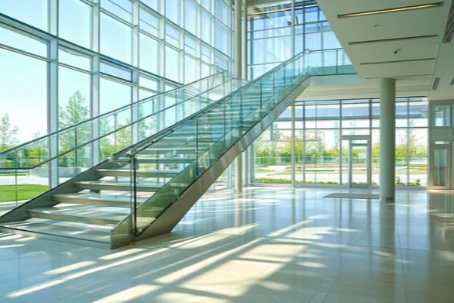
In contemporary architecture, glass has evolved far beyond standard transparent panels. It now plays an active role in building performance and occupant comfort. Advanced glass coatings are a key reason why, offering architects tools to shape energy use, visual quality, and long-term durability in their projects. These coatings are thin surface layers or embedded treatments that significantly alter how glass interacts with light, heat, and the environment, allowing designers to fine-tune building performance without compromising aesthetics.
The Basics: Why Coatings Matter
At its core, glass is transparent to visible light, but it also allows heat from the sun to pass through. Without intervention, this can lead to higher cooling loads in summer and heat loss in winter. Advanced coatings modify these natural properties, managing heat flow and light transmission to directly contribute to a building’s energy profile. This is especially important on glazed facades and curtain wall systems, where windows can account for a large portion of a building’s energy use.
Key Types of Coatings and Their Roles
Understanding the options and what they deliver will help architects align performance goals with design intent. Here are some of the main coating types used today:
Low-Emissivity (Low-E) Coatings
These ultra-thin metallic layers reflect long-wave infrared radiation, helping keep interior conditions stable. A passive low-E coating can allow beneficial solar heat in during cold weather while reflecting interior warmth into the room. Solar-control low-E coatings focus on limiting heat gain during hot seasons, reducing reliance on mechanical cooling. This dual control of heat transfer is central to energy-efficient design.
Solar Control Coatings
Designed to manage incoming solar radiation, these coatings help regulate heat and glare. By selectively reflecting or absorbing certain wavelengths, they reduce the burden on HVAC systems, improve occupant comfort, and maintain natural daylighting without excessive brightness.
Anti-Reflective and Optical Coatings
In some projects, maximizing transparency is essential. Anti-reflective coatings reduce
glare and increase visible light transmission, enhancing views and interior brightness. Such coatings are often applied in museums, galleries, and retail environments where clear sightlines are important.
Self-Cleaning and Hydrophobic Coatings
Exterior glass surfaces are prone to soiling from rain, pollution, and dust. Hydrophobic and photocatalytic coatings create surfaces that repel water and break down organic contaminants, lowering maintenance costs and retaining clarity over time.
Smart and Dynamic Coatings
While still emerging in many regions, dynamic systems such as electrochromic or thermochromic coatings can change their optical properties in response to electrical input or temperature shifts. These technologies give architects control over daylight and solar heat through automation or occupant control, enhancing comfort and reducing energy use in real time.
How Coatings Influence Design Decisions
Advanced coatings should not be an afterthought. They influence thermal comfort, energy demand, lighting quality, and even acoustic performance. For example, pairing high performance coatings with insulated glazing units can support nearly zero-energy designs, especially in climates with extreme temperature swings. The specific choice of coating affects metrics such as the solar heat gain coefficient (SHGC), visible light transmittance (VLT), and U-value, which, in turn, affect compliance with energy codes and green building standards.
Balancing Performance and Appearance
Architects often need to balance energy performance with visual goals. Coatings vary in appearance, from nearly neutral to subtly tinted, and can influence how a building integrates with its surroundings. Creative use of coatings also enables unique interior lighting effects while controlling glare and heat gain. It is useful to involve daylight analysis early in design to understand how different coating strategies affect environmental conditions throughout a space.
Navigating Material Terms
One term that occasionally appears in project specifications is ” Architectural Glass table top.” This refers to a specific application of high-performance glass used in horizontal or near-horizontal architectural elements. In these positions, coating selection is critical due
to direct exposure to sunlight and weather, which can amplify heat gain and soiling. Careful selection of coating for such horizontal applications ensures longevity and performance.
Looking Ahead: Trends and Considerations
Research continues into coatings that offer multi-functional benefits. Innovations include materials that combine thermal control with UV protection, offer low-haze anti-reflective properties, or even have energy-harvesting potential. As sustainability goals tighten and building performance standards evolve, architects will increasingly specify glazing systems that contribute measurable energy savings and occupant well-being.
In summary, advanced glass coatings are a critical tool in the modern architect’s toolkit. They do more than reduce energy use; they shape how buildings perform, feel, and interact with their environment. Thoughtful specification of these technologies, informed by climate, orientation, and design intent, can elevate a project’s sustainability and comfort without compromising on clarity or design vision.