Laser technology has moved far beyond simple cutting and engraving applications. Today, cutting-edge laser technologies are transforming industries such as healthcare, manufacturing, defense, telecommunications, and scientific research. With unmatched precision, speed, and efficiency, modern laser systems have become the backbone of advanced industrial processes and medical treatments. This article explores the latest innovations in laser technology, their applications, advantages, and future potential.
Understanding the Evolution of Laser Technology
Laser stands for Light Amplification by Stimulated Emission of Radiation. The first functional laser was developed in 1960, and since then, laser technology has evolved at an extraordinary pace. Early lasers were bulky, expensive, and limited in application. Modern lasers are compact, energy efficient, and powerful enough to be used in microsurgery, semiconductor fabrication, and deep-space communication.
The evolution of laser technology has been driven by advancements in optics, electronics, artificial intelligence, and material science. Today’s laser systems are not only more powerful but also smarter and more adaptable than ever before.
What Makes a Laser Technology Cutting Edge
Cutting-edge laser technologies are defined by several key characteristics. They offer extremely high precision with minimal thermal damage. They operate at higher speeds while maintaining accuracy. They are energy efficient and environmentally friendly. They integrate advanced software, automation, and AI for real-time control. They also support a wide range of wavelengths and power levels for diverse applications.
These features allow modern lasers to perform tasks that were previously impossible or highly inefficient using traditional tools.
Types of Advanced Laser Technologies
Fiber Laser Technology
Fiber lasers use optical fibers doped with rare-earth elements such as ytterbium or erbium. They are widely used in industrial cutting, welding, and marking due to their high beam quality and efficiency. Fiber lasers offer long operational life, low maintenance, and excellent performance for metal processing.
Ultrafast Lasers
Ultrafast lasers, including femtosecond and picosecond lasers, emit extremely short pulses of light. These lasers enable cold processing, meaning material is removed without generating heat damage. This makes them ideal for medical surgery, microelectronics, and precision manufacturing.
Semiconductor Lasers
Also known as diode lasers, semiconductor lasers are compact, affordable, and energy efficient. They are widely used in telecommunications, barcode scanners, laser pointers, medical equipment, and consumer electronics.
Free Electron Lasers
Free electron lasers are among the most powerful laser systems in existence. They produce extremely bright and tunable radiation and are mainly used in scientific research, particle physics, and material analysis.
Solid State Lasers
Solid state lasers use solid crystals or glass as the gain medium. These lasers are commonly used in medical treatments, military targeting systems, and industrial processing.
Medical Breakthroughs Using Cutting Edge Laser Technologies
Laser technology has revolutionized modern healthcare. Advanced laser systems now perform complex medical procedures with minimal invasion, faster healing, and greater precision.
Laser Surgery and Minimally Invasive Treatments
Ultrafast lasers are used in eye surgeries such as LASIK, enabling precise corneal reshaping. Laser scalpels allow surgeons to make bloodless incisions with minimal tissue damage. This reduces the risk of infection and speeds up recovery.
Cancer Diagnosis and Treatment
Lasers are used for tumor detection, photodynamic therapy, and targeted cancer treatments. High-precision lasers destroy cancer cells without damaging surrounding healthy tissue.
Dermatology and Cosmetic Procedures
From skin resurfacing to tattoo removal and hair reduction, cutting-edge lasers offer safe and effective cosmetic treatments. Adjustable wavelengths allow dermatologists to customize treatments for different skin types.
Industrial Applications of Advanced Laser Technologies
Modern manufacturing relies heavily on laser technology for automation, accuracy, and speed.
Laser Cutting and Welding
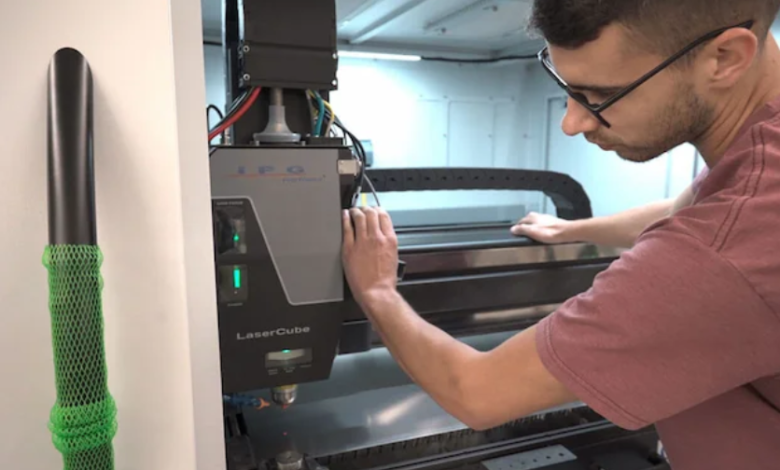
Fiber and CO₂ lasers are widely used for cutting metals, plastics, and composites. They deliver clean edges, reduce material waste, and improve production speed. Laser welding provides strong, high-quality joints with minimal distortion.
Micro Machining and Electronics
Manufacturing
Ultrafast lasers enable micro-scale processing for semiconductors, circuit boards, and medical devices. This includes drilling microscopic holes, marking microchips, and patterning thin films.
Additive Manufacturing and 3D Printing
Laser-based 3D printing, also known as laser powder bed fusion, allows manufacturers to build complex metal components layer by layer. This technology is widely used in aerospace, automotive, and medical implant production.
Laser Technologies in Defense and Security
Cutting-edge laser technologies play a critical role in modern defense systems.
Directed Energy Weapons
High-energy lasers are being developed as precision weapons capable of disabling drones, missiles, and vehicles with extreme accuracy.
Targeting and Range Finding
Laser range finders and targeting systems provide military forces with real-time distance measurement and accurate targeting under extreme conditions.
Surveillance and Threat Detection
Advanced laser sensors are used for detecting explosives, chemical threats, and hidden objects in security operations.
The Role of Lasers in Telecommunications and Data Transmission
Lasers are the backbone of modern global communication systems.
Fiber Optic Communication
Laser light carries data through fiber optic cables across continents and under oceans at the speed of light. This enables high-speed internet, video streaming, and cloud computing.
Data Centers and Optical Networking
Laser technologies enable fast data transfer between servers and networks. This supports the growing demand for artificial intelligence, big data, and digital services.
Scientific Research Powered by Laser Innovation
Lasers are essential tools in cutting-edge scientific research.
Spectroscopy and Material Analysis
Laser spectroscopy allows scientists to analyze the chemical composition of materials at the atomic level. This is used in chemistry, physics, and environmental science.
Space Exploration and Astrophysics
Laser communication systems are being developed for deep-space missions. Laser ranging is used to measure distances between Earth and satellites with extreme accuracy.
Nuclear Fusion Research
High-power laser systems are used in experimental nuclear fusion projects to replicate the conditions of the sun and explore clean energy solutions.
Key Benefits of Cutting Edge Laser Technologies
Advanced laser systems offer numerous advantages over traditional tools and techniques.
They provide unmatched precision and control. They reduce material waste and improve efficiency. They lower long-term operational costs. They enable automation and smart manufacturing. They minimize environmental impact through cleaner processing.
These benefits make laser technology essential for industries seeking higher productivity and sustainable growth.
Integration of Artificial Intelligence with Laser Systems
Artificial intelligence is transforming laser technology by enabling real-time monitoring, adaptive control, and predictive maintenance. AI-powered laser machines can automatically adjust power, focus, and speed based on material type and thickness. This increases accuracy, reduces human error, and improves overall production quality.
In medical applications, AI helps guide laser surgeries with enhanced imaging and decision-making support.
Safety and Regulatory Standards in Laser Technology
As laser systems become more powerful, safety regulations are increasingly important. International standards such as IEC and FDA guidelines ensure safe laser operation in industrial and medical environments. Protective eyewear, controlled environments, and automated safety interlocks are mandatory in high-power laser facilities.
Proper training and compliance help prevent accidents and ensure responsible use of cutting-edge laser technologies.
Future Trends in Laser Technology
The future of laser technology is filled with exciting possibilities.
Quantum lasers are being explored for ultra-secure communication. Compact high-power lasers will enable portable medical and industrial tools. Laser-driven fusion could provide a new source of clean energy. Advanced photonic chips will integrate lasers directly into electronic circuits for faster computing.
As research continues, laser technology will remain a driving force behind innovation across multiple fields.
Economic Impact of Advanced Laser Systems
The global laser technology market continues to grow rapidly. Industries such as automotive, healthcare, defense, consumer electronics, and renewable energy heavily invest in laser systems. This growth creates new job opportunities, boosts manufacturing efficiency, and fuels technological development worldwide.
Small and medium-sized businesses also benefit from affordable compact laser systems for engraving, cutting, and product customization.
Environmental Benefits of Laser Technologies
Laser processing is considered environmentally friendly compared to traditional mechanical methods. It reduces the need for chemicals, lowers energy consumption, and produces minimal waste. Laser-based renewable energy research, such as solar cell manufacturing and fusion studies, further supports global sustainability goals.
Challenges and Limitations of Cutting Edge Laser Technologies
Despite their advantages, advanced lasers face certain challenges. High initial investment costs can limit adoption. Specialized training is required for operation and maintenance. High-power lasers pose safety risks if not properly managed. Some applications require expensive cooling systems and precision alignment.
Ongoing research continues to address these limitations and improve accessibility.
Why Cutting Edge Laser Technologies Are the Future
Cutting-edge laser technologies represent the perfect combination of precision, speed, intelligence, and versatility. They are replacing traditional tools in manufacturing, transforming modern medicine, strengthening national security, and powering the digital world. As industries continue to demand more accurate, efficient, and sustainable solutions, lasers will remain at the center of technological progress.
From microscopic medical procedures to large-scale industrial production, laser technologies are shaping the future of human innovation.
Final Thoughts
Cutting-edge laser technologies are no longer limited to laboratories and research centers. They are now deeply embedded in everyday life through medical equipment, smartphones, vehicles, communication networks, and security systems. With continuous improvements in power, control, efficiency, and AI integration, laser technology will continue to redefine what is possible in science, industry, and healthcare.