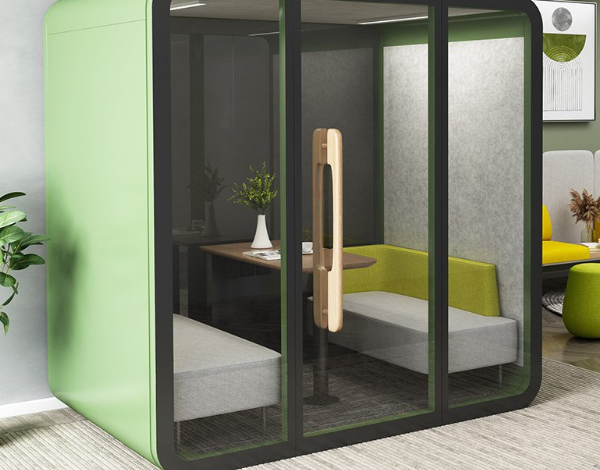
The open-plan office, once the darling of modern architecture, is facing a reckoning. As businesses navigate the complexities of 2026, the noise, distractions, and lack of privacy in open layouts are driving a demand for smarter, more adaptable solutions. Companies are no longer looking for permanent walls; they are seeking agility. This shift has placed a spotlight on innovative partners like Meet&Co, who are redefining how we think about workspace privacy. By integrating flexible acoustic solutions, businesses can create environments that balance collaboration with the deep focus required for high-level work.
1. The Evolution of the Hybrid Workspace
The workplace of 2026 is a dynamic ecosystem. It serves as a collaboration hub for hybrid teams, a social anchor for culture, and a sanctuary for focused tasks. However, the “collaboration hub” aspect often clashes with the “focused tasks” requirement.
Employees returning to the office often find themselves retreating to their cars or coffee shops just to take a private call. Modular pods bridge this gap. They are not merely furniture; they are “rooms” that can be deployed instantly, offering the acoustic isolation of a private office without the sunk costs of drywall construction. They represent a shift from fixed real estate to fluid, user-centric design.
See also: ClarityCheck as a Modern Business Intelligence Tool
2. The Strategic Benefits of Acoustic Pods
Investing in office pods is not just about reducing noise; it is about enhancing the entire employee experience. Here is why forward-thinking companies are prioritizing this investment:
- Boosted Productivity: By eliminating visual and auditory distractions, employees can enter “flow states” faster. Studies show that regaining focus after an interruption can take up to 23 minutes; pods minimize these interruptions.
- Enhanced Privacy: whether for sensitive HR discussions, confidential client calls, or personal health matters, pods provide a secure environment that open desks cannot.
- Space Efficiency: Pods occupy a small footprint—often less than 15 square feet—making them ideal for maximizing expensive office real estate.
- Neurodiverse Inclusivity: For employees who may be sensitive to sensory overload, a quiet, controlled environment is essential for their well-being and performance.
- Retention & Satisfaction: Providing high-quality tools for work signals to employees that their comfort and output are valued, which is a key factor in retention strategies.
3. Evaluating Manufacturer Expertise and Pedigree
The market has seen an explosion of new entrants, but manufacturing a high-performance pod is a complex engineering challenge. It requires mastery of acoustics, ventilation, and structural safety. When you are scouting for a partner, you aren’t just buying a box; you are choosing a modular office pod supplier who can guarantee longevity and compliance.
The “best in the world” standard is often set by pioneers like Framery, known for their uncompromising build quality and acoustic innovation. A reputable supplier will emulate this level of excellence, offering detailed data sheets, ISO certifications, and a consultative approach rather than a hard sell. They understand that a pod must withstand thousands of door openings and years of daily use while maintaining its acoustic integrity.
4. Deciphering Acoustics: The Science of Silence
Acoustics are the primary performance metric for any pod. However, “soundproof” is often a marketing exaggeration. The goal is “sound reduction” to a level where speech becomes unintelligible from the outside.
A high-quality pod should offer a sound reduction of roughly 30 decibels (dB). This transforms a loud argument outside into a soft murmur inside. Key features to look for include:
- Laminated Acoustic Glass: Similar to car windshields, this blocks sound transmission effectively.
- Double-Sealed Doors: Magnetic or compression seals are vital to prevent sound leakage at the gaps.
- Acoustic Felt Lining: Interior walls should be lined with sound-absorbing materials to prevent echo (reverberation) inside the booth.
5. Aesthetics: Harmonizing with Your Environment
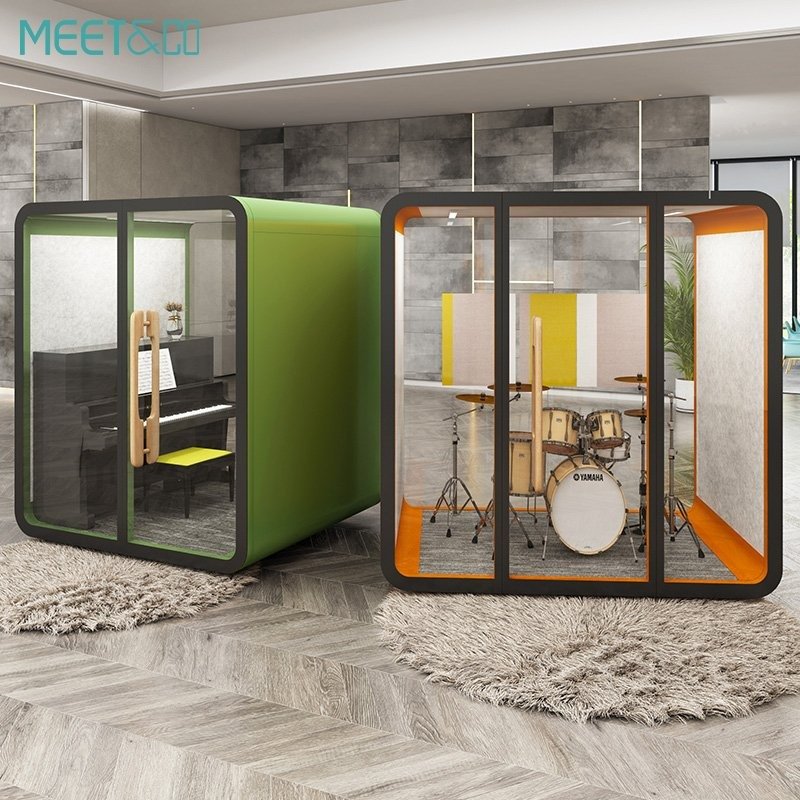
Functionality should never come at the cost of design. An office pod is a significant visual element that will likely sit in the center of your floor plan. It must blend seamlessly with your existing aesthetic to avoid looking like an afterthought.
Leading manufacturers offer extensive customization options, allowing the exterior chassis and interior fabrics to match your brand palette. When selected carefully, these pods naturally fit alongside your modern office furniture, creating a cohesive look that feels intentional and sophisticated. Whether your office leans towards industrial chic or Scandinavian minimalism, the pod should serve as a complementary architectural feature, not a visual obstruction.
6. Ventilation and Air Quality: A Health Priority
In the post-pandemic era, air quality is non-negotiable. A small enclosed space can become stuffy and CO2-rich within minutes if the ventilation is poor.
- Airflow Rate: Look for a system that refreshes the air completely every 60-90 seconds.
- Motion Activation: Fans should trigger automatically upon entry and run for a few minutes after exit to clear the air for the next user.
- Noise Level: The ventilation system must be whisper-quiet. If the fan noise is distracting, the pod fails its primary purpose of enabling focus.
7. Connectivity and Power Integration
A pod is a micro-office, and it needs to be powered like one. In 2026, the standard for connectivity has risen. A single outlet is no longer sufficient for the array of devices modern workers carry.
Ensure your pod includes:
- USB-C & USB-A Fast Charging: For phones and tablets.
- AC Power Sockets: Positioned at table height for easy laptop charging.
- Dimmable Lighting: LED strips that can be adjusted from bright “work mode” to soft “video call mode” to improve on-camera appearance.
- Ethernet Ports: While Wi-Fi is standard, a hardline connection ensures zero latency for critical video conferences.
8. Smart Buying Tips for 2026
Navigating the purchase process can be tricky. Use these professional tips to avoid common pitfalls:
- Measure the “Swing”: Don’t just measure the pod’s footprint; measure the door swing radius to ensure it doesn’t block walkways.
- Check the Ceiling Height: Ensure your office ceiling is at least 20cm higher than the pod roof to allow the ventilation fans to exhaust hot air properly.
- Test Before You Invest: If possible, visit a showroom. Sit in the pod, close the door, and make a phone call. The “silence test” is the only way to truly judge quality.
- Plan for Power: Verify where your floor boxes or wall outlets are. You don’t want to run an ugly extension cord across the main walkway to power the pod.
9. Frequently Asked Questions (FAQs)
Q: Are office pods completely soundproof? A: No, and they shouldn’t be for safety reasons (you need to hear a fire alarm). They are designed to reduce sound significantly (class A or B reduction), ensuring speech privacy.
Q: Can the pods be moved after installation? A: Yes. Most high-quality pods are modular and sit on casters (wheels) or can be disassembled. This portability is a major advantage over building a drywall meeting room.
Q: How much maintenance do they require? A: Very little. Routine cleaning of glass and fabric is standard. Mechanically, you may need to replace the air filter or fan unit after several years of heavy use.
Q: Do I need a building permit to install one? A: Generally, no. Since pods are classified as furniture, they typically do not require construction permits, though you should always check local fire codes regarding sprinkler coverage.
Conclusion
Choosing the right modular office pod is an investment in your company’s most valuable asset: its people. By providing a dedicated space for focus and private communication, you are directly addressing the friction points of modern hybrid work. As you evaluate suppliers, look beyond the price tag to the engineering, the acoustics, and the design compatibility. The right pod will not only solve your noise problems but will also become the most popular seat in the office.