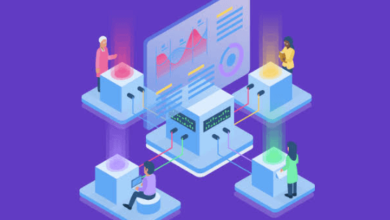
Business decision-making used to be built on gut instinct, spreadsheets, and monthly reports. Now it’s shifting toward something faster and sharper: decisions powered by real-time data, patterns, and prediction. What this really means is that leaders no longer have to ask only what happened. They can ask what’s happening right now, what’s likely to happen next, and what action makes the most sense.
Artificial Intelligence (AI) is at the center of this shift. It doesn’t replace human thinking. It upgrades it by handling the heavy lifting: sorting messy data, spotting hidden trends, forecasting outcomes, and surfacing insights your team would otherwise miss. Let’s break down exactly how AI is transforming decision-making across modern businesses, including fast-moving areas like retail, supply chain, finance, and digital commerce.
1) From Reports to Real-Time Intelligence
Traditional decision-making depends on lagging indicators. A report is created, shared, discussed, and then action happens. By that time, the situation may have already changed.
AI changes this by processing data continuously. Sales performance, customer sentiment, website behavior, competitor pricing, inventory levels, and even macro signals can be analyzed in real time. Instead of waiting for the month-end review, businesses can adjust strategies daily or hourly.
For example:
- A retailer can detect a sudden spike in demand for a category and automatically raise reorder levels.
- A service brand can see rising complaint trends and intervene before churn increases.
- A marketing team can spot when ad fatigue hits and rotate creative before performance drops.
This shift alone transforms decision-making from reactive to responsive.
2) Predictive Analytics: Knowing What’s Likely to Happen Next
Here’s the thing: good decisions aren’t only about what you know today. They’re about what you anticipate tomorrow. AI excels at predicting outcomes based on historical patterns plus current signals.
Predictive analytics models can forecast:
- Demand and seasonality shifts
- Customer churn probability
- Revenue projections by product line
- Stock-out risks
- Campaign performance trends
Instead of debating possibilities in a meeting, teams can work with probability-backed forecasts. It makes planning more grounded and reduces avoidable surprises.
3) Smarter Customer Insights and Personalization
Customers leave footprints everywhere: browsing behavior, cart actions, product reviews, support tickets, social media comments, and purchase history. Humans can’t connect all those dots at scale. AI can.
AI-driven customer analytics helps businesses understand:
- What customers truly value (not just what they say they value)
- Which segments respond to which offers
- What triggers repeat purchases
- Why certain customers drop off
This becomes especially powerful in D2C brands where direct customer relationships are everything. AI enables D2C e-commerce solutions to deliver targeted product recommendations, personalized pricing offers, and better retention journeys.
Personalization isn’t just a marketing trick. It’s a decision-making engine. It tells you what to launch, what to improve, and what to stop selling.
4) Better Pricing Decisions and Margin Control
Pricing is one of the most sensitive business decisions because it hits both sales volume and profit. Many businesses still price using manual competitor checks or broad discounting strategies.
AI enables smarter pricing by analyzing:
- Competitor prices and promotions
- Customer willingness to pay (by segment)
- Inventory position and replenishment speed
- Seasonal demand patterns
- Impact of price changes on conversions
This is where AI becomes a margin protector. Instead of aggressive discounting, businesses can apply precision pricing strategies that drive conversions without destroying profitability.
5) Transforming E-commerce Decision-Making
E-commerce is a decision battlefield: product selection, inventory, fulfillment, UI/UX, retention, customer support, returns, and pricing. AI improves each layer by turning customer behavior into actionable insights.
See also: Effective Techniques for Soil Drainage and Reinforcement
Marketplace vs D2C: AI Helps You Choose the Right Moves
Brands selling through an ecommerce marketplace solution face different challenges than pure D2C brands. Marketplaces bring higher reach but also intense competition, pricing pressure, and limited brand ownership.
AI helps marketplace sellers decide:
- Which products to push based on demand trends
- Which keywords to bid on based on conversion likelihood
- Which regions show the best profitability after shipping and returns
- Which listings need optimization based on review sentiment
Meanwhile, AI helps D2C brands decide:
- Which audiences are most likely to convert
- Which product bundles increase AOV
- Which channels drive profitable customers, not just traffic
- Which repeat purchase triggers work best
So whether you operate a D2C store or rely on marketplaces, AI sharpens the decisions that matter.
6) AI + Headless Commerce: Faster Decisions, Faster Execution
Modern commerce needs speed. Not only in delivery, but in experimentation. That’s where a headless commerce platform becomes a game-changer.
A headless setup separates the front-end experience from the back-end commerce engine. Pair this with AI, and you get something powerful: the ability to test, optimize, and personalize experiences rapidly without rebuilding your entire system.
AI can help a headless commerce platform decide:
- What homepage layout increases conversions for different segments
- Which product recommendations to show per user
- Which checkout flow reduces cart abandonment
- Which content drives higher engagement by channel
This combination turns decision-making into an ongoing loop: learn → decide → deploy → measure → improve.
7) Operational Decisions: Supply Chain, Inventory, and Logistics
Decision-making isn’t only about sales and marketing. Operations is where money is either saved or wasted.
AI improves operational decision-making through:
- Inventory optimization: reducing overstock and stock-outs
- Supply chain forecasting: predicting delays and planning alternatives
- Route optimization: lowering delivery time and fuel costs
- Quality monitoring: spotting defect patterns early
- Workforce scheduling: forecasting peak workloads and staffing accordingly
These decisions directly affect customer satisfaction and profitability. If your delivery takes too long or products go out of stock, marketing can’t fix that. AI helps prevent those issues early.
8) AI Improves Risk Decisions and Fraud Detection
Risk decisions are usually high-stakes: credit approvals, fraud detection, chargebacks, compliance, and finance forecasting. AI excels here because it can analyze patterns that humans can’t easily spot.
For example:
- AI can detect fraud by identifying abnormal purchase patterns and device signals.
- It can flag risky transactions before they become chargebacks.
- It can monitor compliance risks by scanning activity logs and anomalies.
The value here isn’t only prevention. It’s confidence. Teams can take bold business decisions with better guardrails.
9) What AI Can’t Do (And Why Humans Still Matter)
AI is not a replacement for leadership. It can tell you what’s happening and what’s likely, but it cannot define your purpose, your ethics, your brand voice, or your long-term vision. Those are human responsibilities.
AI also depends on the quality of data. If your data is scattered, outdated, or biased, AI can amplify mistakes. That’s why governance matters: clean data, clear KPIs, transparency in decision rules, and human review for sensitive decisions.
Think of AI as a decision partner. It does the analysis. You own the judgment.
Conclusion: Decision-Making Is Becoming a Competitive Advantage
AI is transforming business decision-making by making it faster, more accurate, and more predictive. Companies that adopt AI don’t just “use new technology.” They change how they think and operate. They move from hindsight to foresight. From guessing to learning. From static plans to adaptive strategy.
And in commerce especially, the combination of AI with modern systems like a headless commerce platform, advanced D2C e-commerce solutions, and scalable ecommerce marketplace solution models will define who grows sustainably and who struggles to keep up.
The businesses winning now are not the ones with the biggest teams or budgets. They’re the ones making better decisions, more often, with less delay. AI is helping them do exactly that.