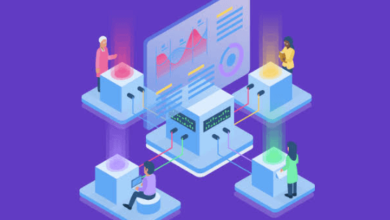
An AI Router is an intelligent orchestration layer that sits between your application and multiple Large Language Model (LLM) providers to optimize performance, manage costs, and ensure service reliability. Building a resilient LLM orchestration with ZenMux involves two primary pillars: implementing automated failover—often referred to as AI Model Insurance—to maintain 99.9% uptime, and setting granular cost caps to prevent unpredictable “bill shock.” By utilizing ZenMux’s intelligent routing logic, developers can automatically switch between flagship frontier models and cost-effective efficiency models based on prompt complexity, ensuring that an API outage or a sudden surge in token usage never compromises the end-user experience or the business’s bottom line.
The Critical Need for an AI Router in Production Environments
In the rapidly evolving landscape of 2026, relying on a single LLM provider like OpenAI, Anthropic, or Google is no longer a viable strategy for enterprise-grade applications. While these providers offer immense power, they are also prone to localized outages, rate-limiting bottlenecks, and fluctuating latency. For a production environment, a single point of failure in the AI stack can lead to broken user workflows, lost revenue, and damaged brand reputation. This is where the necessity of an AI Router becomes apparent.
An AI Router acts as a sophisticated traffic controller for your model requests. Instead of hard-coding your application to a specific model, you connect to a unified gateway. ZenMux serves as this Unified LLM API, providing a stable interface that abstracts away the complexities of managing dozens of different backend SDKs. By adopting a model-agnostic architecture through ZenMux, developers gain the flexibility to pivot between models as the market changes, without ever having to refactor their core application logic. This orchestration layer doesn’t just pass text back and forth; it actively manages the health and performance of your AI infrastructure.
AI Model Insurance: Achieving 99.9% Uptime with Automated Failover
The most critical feature of a resilient AI stack is its ability to handle failure gracefully. ZenMux introduces the concept of AI Model Insurance, which is a technical framework for automated redundancy and failover. In a traditional setup, if the primary model (e.g., GPT-4o) returns a 500 server error or a 429 rate-limit error, the end-user simply sees a “service unavailable” message. With ZenMux, the router detects these errors in real-time and immediately reroutes the request to a pre-configured fallback model, such as Claude 3.5 Sonnet or Llama 3.1.
This dynamic failover mechanism ensures high availability even during major provider outages. ZenMux’s system monitors several key indicators of health, including response latency and success rates. If a provider’s performance degrades beyond a certain threshold, the router proactively shifts traffic to more stable alternatives. If you want the optimal balance between model quality and usage cost, ZenMux’s intelligent routing is the ideal choice.This proactive “insurance” ensures that your application remains responsive 24/7, maintaining the “9s” of uptime that enterprise clients demand. By ensuring that fallback models provide comparable output quality, ZenMux allows for a seamless user experience where the end-user is never even aware that a backend provider switch occurred.
Mastering Token Economics: Implementing Cost Caps and Budget Controls
While reliability is paramount, cost control is the second pillar of professional LLM orchestration. Many developers have experienced “bill shock”—the sudden realization that an experimental agent or a recursive loop has consumed thousands of dollars in tokens overnight. Managing Token Economics requires more than just looking at a pricing table; it requires active spend management integrated directly into the routing layer.
ZenMux empowers developers to implement hard and soft cost caps across their entire AI infrastructure. A “Soft Cap” might trigger a notification or switch the routing logic to a cheaper model (like GPT-4o-mini or Gemini Flash) once a budget threshold is reached. A “Hard Cap” can immediately halt requests to prevent financial hemorrhaging. This level of control is vital for managing the unit economics of an AI-powered product. By balancing the cost-per-request against the value delivered to the user, businesses can scale their AI features with confidence. ZenMux provides the tools to ensure that your growth doesn’t outpace your margins, allowing for sustainable scaling in an environment where token costs can be highly variable.
See also: Effective Techniques for Soil Drainage and Reinforcement
The Brain of the Router: ZenMux Intelligent Model Routing
At the heart of ZenMux is its Intelligent Model Routing engine. This is not a simple round-robin traffic distributor; it is a “Smart Brain” that performs Automated Best-Choice Selection. The system analyzes the request content and task characteristics to automatically choose the most suitable model, ensuring strong results while minimizing costs. This task-aware selection is a game-changer for efficiency.
For example, a request that involves simple sentiment analysis or text summarization doesn’t require the high-compute power (and high cost) of a frontier reasoning model. ZenMux can identify the nature of this task and route it to a “Value” model. Conversely, if the system detects a complex coding request or a deep mathematical problem, it will route the request to a high-performance model to ensure accuracy. This “cheap yet effective” philosophy is built into the core of the router. Furthermore,routing strategies improve over time based on historical data, meaning the system engages in continuous learning to refine its selection process, optimizing for both latency and success rates as your application evolves.
Transparency and Governance: Routing Logs and Custom Rules
For many organizations, the “black box” nature of AI is a significant barrier to adoption. ZenMux addresses this through comprehensive transparency and governance tools. The platform provides detailed routing decision logs with support for custom routing rules.These logs allow developers to audit every single request, seeing exactly why the router chose Model A over Model B, what the latency was, and how much the request cost.
This level of granularity is essential for debugging and for regulatory compliance. Beyond simple logs, developers can implement custom routing rules based on their own internal priorities. Perhaps for a “Premium” tier of users, the rule is to always prioritize accuracy regardless of cost. For “Free” tier users, the priority might be strictly cost-saving. ZenMux allows for this sophisticated orchestration, putting the control back into the hands of the developer. This governance layer ensures that the AI is not just functioning, but is performing exactly according to the strategic needs of the business.
From Setup to Scale: ZenMux Integration and Quickstart Guide
One of the primary benefits of ZenMux is its ease of integration. Transitioning from a single-model setup to a resilient, routed architecture is designed to be a friction-free experience. The Unified Endpoint advantage allows developers to replace dozens of individual API calls with a single ZenMux URL. With intelligent routing, you can enjoy a “cheap yet effective” experience without manually selecting models.
The integration process follows a simple Quickstart path:
- Get Your API Key: Obtain a single key that unlocks the entire ecosystem of LLM providers.
- Configure Your Policy: Define your failover rules (AI Model Insurance) and your cost caps within the ZenMux dashboard.
- Switch the Endpoint: Update your base URL to the ZenMux gateway.
This simple transition future-proofs your stack. As new models are released—such as the next generation of GPT or Claude—you can add them to your routing pool with a few clicks, without ever touching your production code. This agility is the only way to survive the rapid “Model Arms Race” currently dominating the tech industry.
Scaling Resilient AI Systems with Sophisticated Orchestration
Building with an AI Router is no longer just an “advanced” tactic; it is the industry standard for those serious about building robust, AI-native products. By combining ZenMux Routing with AI Model Insurance and Cost Caps, developers create a foundation that is both resilient to failure and optimized for profit. This orchestration layer allows businesses to focus on what truly matters: delivering value to their users through innovative AI features.
The competitive advantage of using ZenMux lies in the transition from “Using AI” to “Managing AI.” Organizations that remain vendor-locked or ignore the volatility of the AI market will struggle with downtime and unpredictable overhead. In contrast, those who leverage intelligent routing and automated failover will outpace the competition through superior reliability and leaner unit economics. ZenMux provides the gateway to this sophisticated future, ensuring that your AI journey is stable, transparent, and built for long-term success.